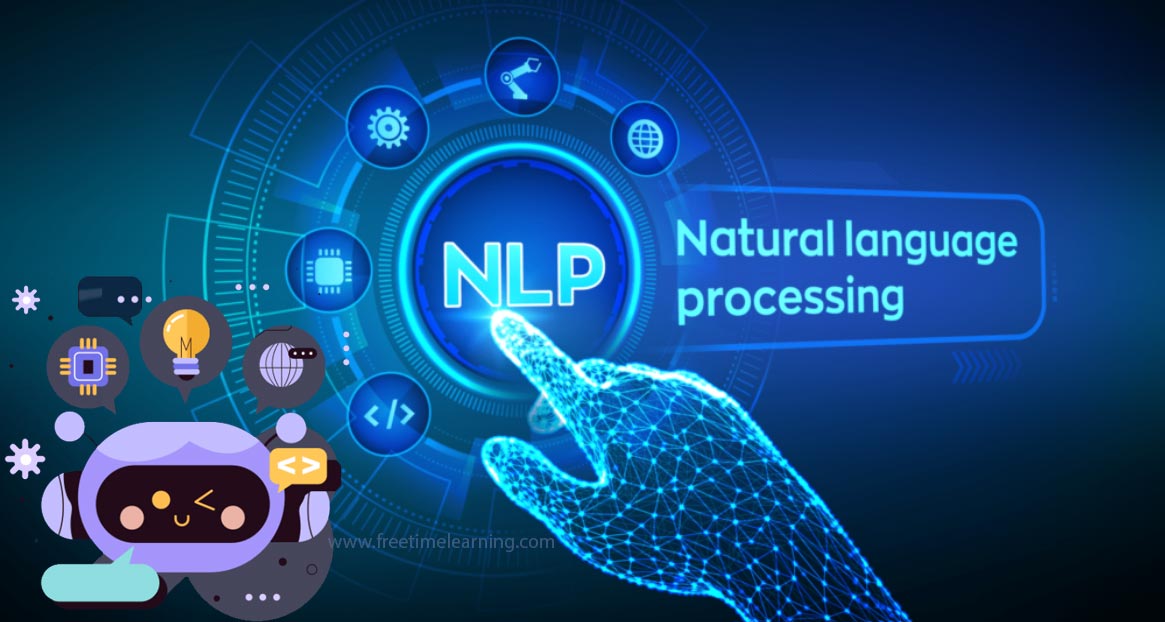
What is Natural Language Processing?
Natural Language Processing (NLP) is a field of artificial intelligence (AI) that focuses on enabling computers to understand, interpret, generate, and manipulate human language. It combines computational linguistics with machine learning and deep learning techniques to process text and speech in a way that mimics human comprehension.
NLP enables computers and digital devices to recognize, understand and generate text and speech by combining computational linguistics—the rule-based modeling of human language—together with statistical modeling, machine learning and deep learning.
NLP research has helped enable the era of generative AI, from the communication skills of large language models (LLMs) to the ability of image generation models to understand requests. NLP is already part of everyday life for many, powering search engines, prompting chatbots for customer service with spoken commands, voice-operated GPS systems and question-answering digital assistants on smartphones such as Amazon’s Alexa, Apple’s Siri and Microsoft’s Cortana.
NLP also plays a growing role in enterprise solutions that help streamline and automate business operations, increase employee productivity and simplify business processes.
Approaches to NLP :
NLP combines the power of computational linguistics together with machine learning algorithms and deep learning. Computational linguistics uses data science to analyze language and speech. It includes two main types of analysis: syntactical analysis and semantical analysis. Syntactical analysis determines the meaning of a word, phrase or sentence by parsing the syntax of the words and applying preprogrammed rules of grammar. Semantical analysis uses the syntactic output to draw meaning from the words and interpret their meaning within the sentence structure.
The parsing of words can take one of two forms. Dependency parsing looks at the relationships between words, such as identifying nouns and verbs, while constituency parsing then builds a parse tree (or syntax tree): a rooted and ordered representation of the syntactic structure of the sentence or string of words. The resulting parse trees underly the functions of language translators and speech recognition. Ideally, this analysis makes the output—either text or speech—understandable to both NLP models and people.
Self-supervised learning (SSL) in particular is useful for supporting NLP because NLP requires large amounts of labeled data to train AI models. Because these labeled datasets require time-consuming annotation—a process involving manual labeling by humans—gathering sufficient data can be prohibitively difficult. Self-supervised approaches can be more time-effective and cost-effective, as they replace some or all manually labeled training data.
Three different approaches to NLP include :
Rules-based NLP :
The earliest NLP applications were simple if-then decision trees, requiring preprogrammed rules. They are only able to provide answers in response to specific prompts, such as the original version of Moviefone, which had rudimentary natural language generation (NLG) capabilities. Because there is no machine learning or AI capability in rules-based NLP, this function is highly limited and not scalable.
Statistical NLP :
Developed later, statistical NLP automatically extracts, classifies and labels elements of text and voice data and then assigns a statistical likelihood to each possible meaning of those elements. This relies on machine learning, enabling a sophisticated breakdown of linguistics such as part-of-speech tagging.
Statistical NLP introduced the essential technique of mapping language elements—such as words and grammatical rules—to a vector representation so that language can be modeled by using mathematical (statistical) methods, including regression or Markov models. This informed early NLP developments such as spellcheckers and T9 texting (Text on 9 keys, to be used on Touch-Tone telephones).
Deep learning NLP :
Recently, deep learning models have become the dominant mode of NLP, by using huge volumes of raw, unstructured data—both text and voice—to become ever more accurate. Deep learning can be viewed as a further evolution of statistical NLP, with the difference that it uses neural network models. There are several subcategories of models:
* Sequence-to-Sequence (seq2seq) models : Based on recurrent neural networks (RNN), they have mostly been used for machine translation by converting a phrase from one domain (such as the German language) into the phrase of another domain (such as English).
* Transformer models : They use tokenization of language (the position of each token—words or subwords) and self-attention (capturing dependencies and relationships) to calculate the relation of different language parts to one another. Transformer models can be efficiently trained by using self-supervised learning on massive text databases. A landmark in transformer models was Google’s bidirectional encoder representations from transformers (BERT), which became and remains the basis of how Google’s search engine works.
* Autoregressive models : This type of transformer model is trained specifically to predict the next word in a sequence, which represents a huge leap forward in the ability to generate text. Examples of autoregressive LLMs include GPT, Llama, Claude and the open-source Mistral.
* Foundation models : Prebuilt and curated foundation models can speed the launching of an NLP effort and boost trust in its operation. For example, the IBM® Granite™ foundation models are widely applicable across industries. They support NLP tasks including content generation and insight extraction. Additionally, they facilitate retrieval-augmented generation, a framework for improving the quality of response by linking the model to external sources of knowledge. The models also perform named entity recognition which involves identifying and extracting key information in a text.