Top 55 IoT Interview Questions and Answers in 2025

Last Updated : 03/11/2025 20:07:47

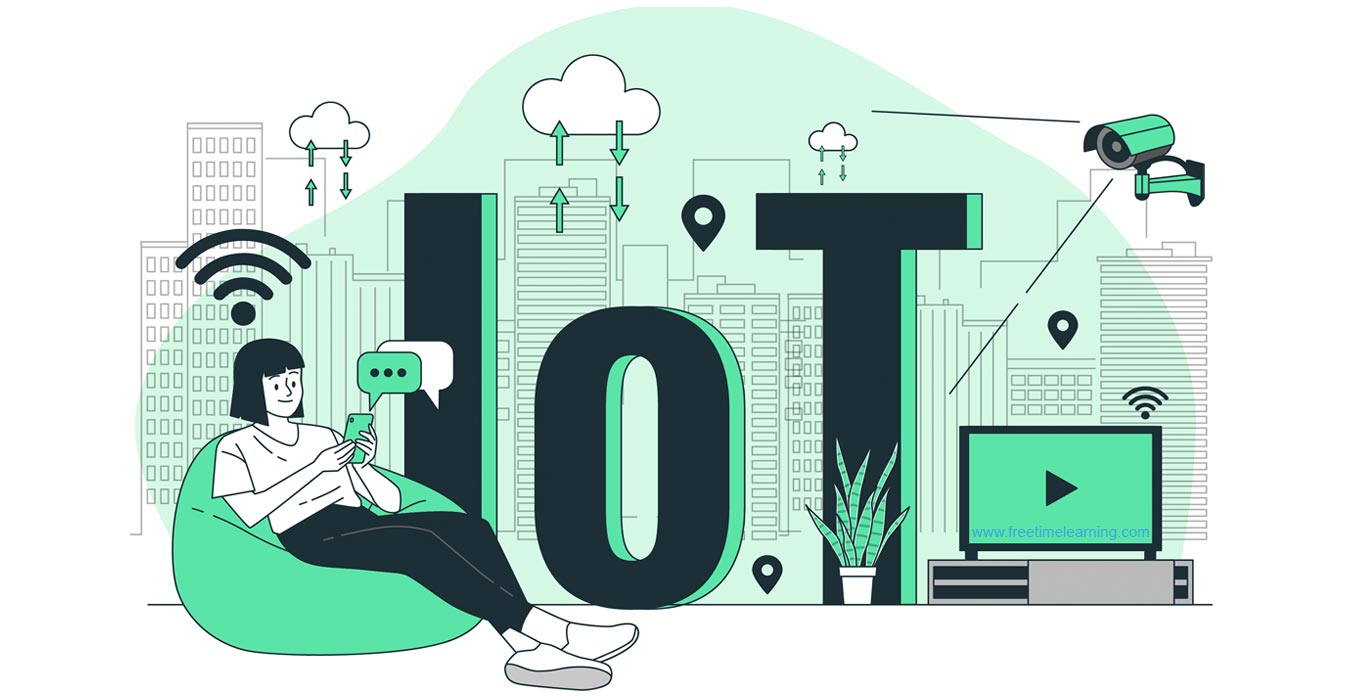
The Internet of Things (IoT) refers to the network of physical objects—devices, vehicles, appliances, and other items embedded with sensors, software, and connectivity

Top 55 IoT Interview Questions and Answers in 2025
The actual term “Internet of Things (IoT)” was coined by Kevin Ashton in 1999 during his work at Procter & Gamble.

The Internet of Things (IoT) refers to the network of physical objects—devices, vehicles, appliances, and other items embedded with sensors, software, and connectivity—that enables them to collect and exchange data over the internet. IoT aims to create a seamless flow of information between the physical and digital worlds, enhancing efficiency, automation, and decision-making.

Key Components of IoT :


* Devices and Sensors : These are the "things" in IoT, such as smart thermostats, wearables, industrial machines, or connected vehicles. They collect data from their environment.

* Connectivity : Devices use various communication protocols (Wi-Fi, Bluetooth, Zigbee, 5G, etc.) to transmit data to the cloud or other devices.

* Data Processing : Once data is collected, it is processed and analyzed, often using cloud computing or edge computing.

* User Interface : The processed data is made accessible to users through apps, dashboards, or other interfaces, enabling control and monitoring.


Applications of IoT :


* Smart Homes : Devices like smart lights, thermostats, and security systems automate and optimize home environments.

* Healthcare : Wearable devices and remote monitoring tools improve patient care and health management.

* Industrial IoT (IIoT) : Sensors and automation in manufacturing improve efficiency, predictive maintenance, and safety.

* Smart Cities : IoT enables traffic management, waste management, and energy optimization in urban areas.

* Agriculture : Smart farming uses IoT for soil monitoring, irrigation control, and crop management.

* Retail : IoT enhances inventory management, customer experience, and supply chain efficiency.

Benefits of IoT :


* Efficiency : Automation and real-time data reduce waste and improve resource management.

* Convenience : Smart devices simplify daily tasks and improve quality of life.

* Cost Savings : Predictive maintenance and optimized operations reduce expenses.

* Data-Driven Insights : IoT generates vast amounts of data, enabling better decision-making.


Challenges of IoT :


* Security : Connected devices are vulnerable to cyberattacks, requiring robust security measures.

* Privacy : The collection of personal data raises concerns about user privacy.

* Interoperability : Devices from different manufacturers may not always work seamlessly together.

* Scalability : Managing and maintaining large-scale IoT networks can be complex.

* Energy Consumption : Many IoT devices rely on batteries, requiring energy-efficient designs.


Future of IoT :


IoT is expected to grow significantly with advancements in 5G, artificial intelligence (AI), and edge computing. These technologies will enable faster data processing, lower latency, and more intelligent automation. The integration of IoT with AI and machine learning will further enhance its capabilities, enabling predictive analytics and autonomous decision-making.


IoT Interview Questions and Answers


1 . What is the Internet of Things (IoT)?


The actual term “Internet of Things (IoT)” was coined by Kevin Ashton in 1999 during his work at Procter & Gamble.

The Internet of Things (IoT) describes the network of physical objects “things” that are embedded with sensors, software, and other technologies for the purpose of connecting and exchanging data with other devices and systems over the internet. These devices range from ordinary household objects to sophisticated industrial tools.

There are many IoT devices or things available today, including wearables, implants, vehicles, machinery, smartphones, appliances, computing systems, or any other item that can send and receive data.


3 . What technologies have made IoT possible?


While the idea of IoT has been in existence for a long time, a collection of recent advances in a number of different technologies has made it practical.
 
Access to low-cost, low-power sensor technology. Affordable and reliable sensors are making IoT technology possible for more manufacturers.

Connectivity. A host of network protocols for the internet has made it easy to connect sensors to the cloud and to other “things” for efficient data transfer.

Cloud computing platforms. The increase in the availability of cloud platforms enables both businesses and consumers to access the infrastructure they need to scale up without actually having to manage it all.

Machine learning and analytics. With advances in machine learning and analytics, along with access to varied and vast amo

Note : This article is only for students, for the purpose of enhancing their knowledge. This article is collected from several websites, the copyrights of this article also belong to those websites like : Newscientist, Techgig, simplilearn, scitechdaily, TechCrunch, TheVerge etc,.