Agentic AI: The Third Wave of Artificial Intelligence

Last Updated : 03/20/2025 12:39:10


Agentic AI: The Third Wave of Artificial Intelligence

What is Agentic AI?


Agentic AI refers to artificial intelligence systems designed to act autonomously, make decisions, and take actions on behalf of users or systems to achieve specific goals. Unlike traditional AI, which often focuses on narrow tasks (e.g., image recognition or text generation), agentic AI is characterized by its ability to operate as an "agent"—a proactive entity capable of reasoning, planning, and interacting with its environment in a goal-directed way.


Key Characteristics of Agentic AI


1. Autonomy : It can function independently, requiring minimal human intervention once given a goal or task.

2. Decision-Making : It evaluates options, weighs trade-offs, and chooses actions based on reasoning or learned behavior.

3. Goal-Oriented : It works toward predefined objectives, adapting its approach as needed.

4. Interactivity : It can engage with external systems, tools, or humans to gather information or execute tasks.

5. Adaptability : It adjusts to changing conditions or new data, often using feedback loops to improve performance.


How Agentic AI Works :


Agentic AI typically combines several technologies:

  • Machine Learning: To learn from data and improve over time.
  • Natural Language Processing (NLP): To understand and generate human-like communication.
  • Reasoning Engines: To plan, prioritize, and make decisions.
  • APIs and Integrations: To interact with external tools, databases, or environments.
  • Reinforcement Learning: In some cases, to optimize actions based on rewards or outcomes.

For example, an agentic AI might be tasked with "schedule a meeting for next week." It could:

  1. Check your calendar for availability.
  2. Contact participants via email or messaging platforms.
  3. Propose times, handle responses, and finalize the booking—all without you micromanaging the process.


Examples of Agentic AI :

  • Virtual Assistants: Advanced versions like xAI’s Grok (me!) or future iterations of Siri/Google Assistant that don’t just respond to commands but proactively manage tasks.
  • Autonomous Agents: Software that handles customer support, negotiates prices, or optimizes supply chains without constant oversight.
  • AI Workflows: Tools like AutoGPT or BabyAGI, which break down complex goals into steps and execute them iteratively.
  • Robotics: Physical agents like self-driving cars or warehouse robots that navigate and perform tasks independently.


Agentic AI in DevOps :


Since you asked about DevOps earlier, agentic AI could play a role there too. Imagine an AI that:

  • Monitors a CI/CD pipeline, detects a failing build, diagnoses the issue, and deploys a fix—all autonomously.
  • Scales cloud resources based on traffic predictions without manual input.
  • Identifies security vulnerabilities and patches them in real-time.


Benefits :

  • Efficiency: Automates complex, multi-step processes.
  • Scalability: Handles tasks at a scale humans can’t manage alone.
  • Proactivity: Anticipates needs rather than just reacting.


Challenges :

  • Ethics: Who’s responsible if an agentic AI makes a bad decision?
  • Control: Ensuring it doesn’t act beyond its intended scope.
  • Trust: Users need confidence in its reasoning and actions.


The Third Wave of Artificial Intelligence


"The Third Wave of Artificial Intelligence" is a concept that describes the current and emerging phase of AI development, building on the two prior waves. It’s often framed within historical context to highlight how AI has evolved and where it’s headed. While the term is sometimes popularized by thought leaders like DARPA or authors like Steve Case (in his book The Third Wave), it’s broadly understood in the AI community as a shift toward more autonomous, context-aware, and adaptive systems—like agentic AI, which we just discussed. Let’s break it down.

The Three Waves of AI

1. First Wave: Rule-Based Systems (1950s–1980s)

  • What It Was: AI driven by hand-crafted rules and logic, often called "expert systems."
  • Characteristics: Relied on explicit "if-then" statements programmed by humans. No learning, just reasoning within predefined boundaries.
  • Examples: Chess-playing programs (early versions), medical diagnosis systems.
  • Limitations: Brittle and narrow—couldn’t handle ambiguity or adapt beyond its rules.


2. Second Wave: Statistical Learning (1990s–2010s)

  • What It Was: AI powered by data and machine learning, especially neural networks.
  • Characteristics: Excels at pattern recognition and prediction using large datasets. Think "narrow AI" optimized for specific tasks.
  • Examples: Image recognition (e.g., convolutional neural networks), natural language processing (e.g., early chatbots), recommendation systems (Netflix, Amazon).
  • Limitations: Requires massive data, lacks reasoning or understanding, and struggles outside its training scope.


3. Third Wave: Contextual and Autonomous AI (2010s–Present and Beyond)

  • What It Is: AI that combines perception, reasoning, and adaptability to operate in complex, real-world environments with less human oversight.
  • Characteristics :
    • Context Awareness: Understands situations holistically, not just patterns in data.
    • Autonomy: Makes decisions and takes actions (agentic behavior).
    • Learning Efficiency: Adapts with less data, often through techniques like transfer learning or reinforcement learning.
    • Human-AI Collaboration: Works alongside humans as a partner, not just a tool.
  • Examples: Self-driving cars reasoning about unpredictable roads, AI diagnosing diseases with limited patient data, or systems like me (Grok) aiming to provide nuanced, goal-driven answers.
  • Key Technologies:
    • Advanced NLP and generative AI (e.g., GPT models, transformers).
    • Reinforcement learning for decision-making.
    • Multi-modal AI (integrating text, images, etc.).
    • Neurosymbolic AI (blending symbolic reasoning with neural networks).

What Defines the Third Wave?

The Third Wave is about moving beyond "dumb" pattern-matching AI to systems that mimic human-like intelligence more closely. It’s not just about doing tasks faster but doing them smarter—handling ambiguity, reasoning through problems, and acting proactively. For instance:

  • A Second Wave AI might classify an email as spam based on keywords.
  • A Third Wave AI might read the email, understand its intent, and draft a reply based on your schedule and preferences.

This wave is often tied to the idea of "Artificial General Intelligence" (AGI) as a long-term goal, though it’s more immediately about bridging narrow AI’s gaps with broader, more flexib


Real-World Applications of Agentic AI


Apart from the benefits and opportunities, here are some real-world applications of Agentic AI that are having a significant impact.

Accelerating Drug Discovery and Development :


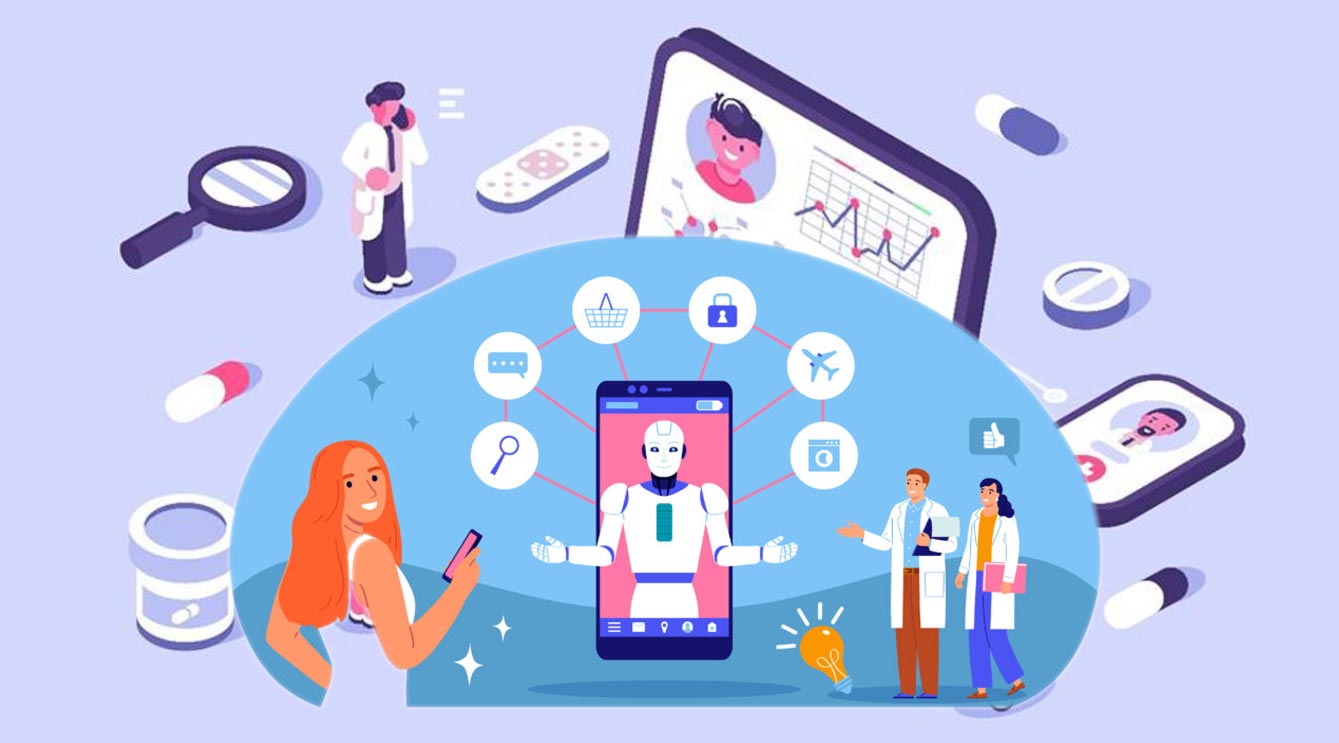
Agentic AI has a significant impact on healthcare by accelerating drug development and discovery. Large-scale data analysis enables AI to swiftly find possible therapeutic targets and forecast their efficacy. This not only shortens the time needed for research but also reduces costs, bringing medications to market faster. Additionally, AI helps create personalized treatment plans based on a patient’s specific medical data, ensuring more accurate care and better patient outcomes.

Accelerating and Optimizing Testing :


Agentic AI is making software testing more efficient by automating processes like test design, execution, and analysis. Wh

Note : This article is only for students, for the purpose of enhancing their knowledge. This article is collected from several websites, the copyrights of this article also belong to those websites like : Newscientist, Techgig, simplilearn, scitechdaily, TechCrunch, TheVerge etc,.