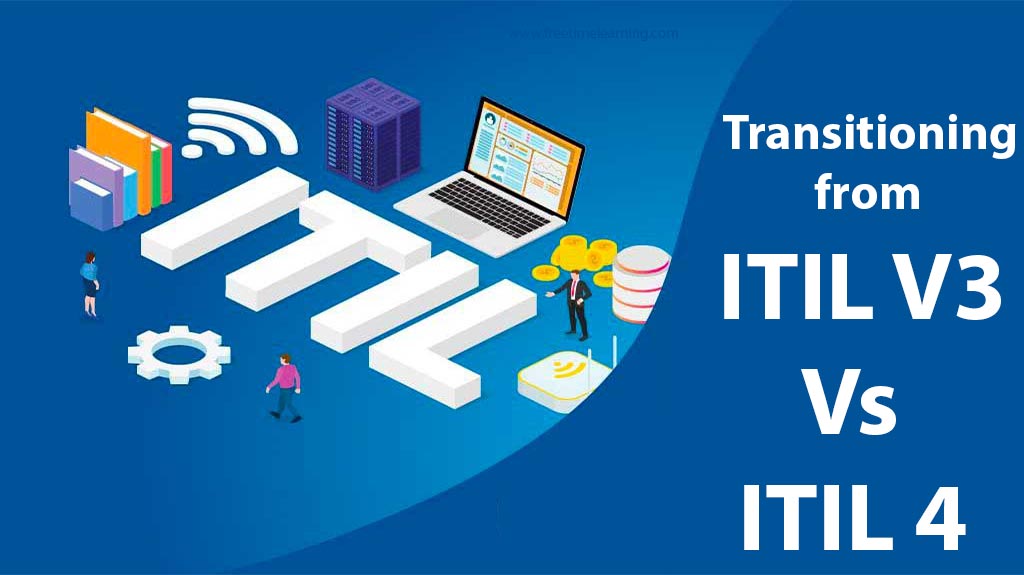
ITIL V3 (Information Technology Infrastructure Library Version 3) is a framework for IT Service Management (ITSM) that helps organizations align their IT services with business goals. It provides best practices for delivering quality IT services efficiently and effectively.
ITIL V3 was first released in 2007 and updated in 2011, focusing on the service lifecycle approach.
ITIL V3 is structured around five lifecycle stages, each with specific processes and objectives :
Service Strategy
Sets the direction and goals for IT services.
Includes: Service Portfolio Management, Financial Management, Demand Management.
Service Design
Designs new or changed services for introduction into the live environment.
Includes: Service Level Management, Capacity Management, Availability Management, IT Service Continuity Management.
Service Transition
Manages the transition of services into production.
Includes: Change Management, Release & Deployment Management, Service Asset & Configuration Management.
Service Operation
Oversees the day-to-day delivery and support of services.
Includes: Incident Management, Problem Management, Event Management, Access Management, Request Fulfillment.
Continual Service Improvement (CSI)
Focuses on learning and improvement.
Uses metrics and feedback to improve efficiency and effectiveness of processes and services.
Align IT services with business needs.
Improve service quality and customer satisfaction.
Increase operational efficiency.
Reduce costs through standardization and best practices.
Manage risk and ensure consistent service delivery.
It provided a comprehensive, structured approach to ITSM.
Widely adopted across industries.
Supported by certifications, training, and software tools.
ITIL 4 is the latest version of the ITIL (Information Technology Infrastructure Library) framework, released in 2019. It builds on the foundation of ITIL V3, but takes a more modern, flexible, and value-driven approach to IT Service Management (ITSM).
ITIL 4 helps organizations co-create value through IT-enabled services, focusing on agility, collaboration, and continual improvement.
A high-level framework that describes how all the components and activities of an organization work together to enable value creation.
Guiding Principles (e.g., Focus on Value, Collaborate & Promote Visibility)
Governance
Service Value Chain
Practices (formerly “processes”)
Continual Improvement
The core operating model of ITIL 4, made up of six key activities that help deliver value:
Plan
Improve
Engage
Design & Transition
Obtain/Build
Deliver & Support
Grouped into :
General Management Practices (e.g., Risk Management, Continual Improvement)
Service Management Practices (e.g., Incident, Problem, Change Management)
Technical Management Practices (e.g., Infrastructure and Platform Management)
Aligns IT with business goals more effectively.
Integrates with modern methodologies like Agile, DevOps, and Lean.
Promotes collaboration and transparency across teams.
Encourages continuous improvement and adaptability.
ITIL 4 Foundation – Introduction to core concepts.
ITIL 4 Managing Professional (MP) – For IT practitioners.
ITIL 4 Strategic Leader (SL) – For leaders in digital strategy.
ITIL Master – For deep expertise and practical application.
Sure! Here's a clear breakdown of the major changes from ITIL V3 to ITIL 4, highlighting how the framework evolved to meet the demands of modern IT environments:
| Area | ITIL V3 | ITIL 4 |
|---|---|---|
| Structure | 5 Lifecycle Stages | Service Value System (SVS) |
| Core Model | Service Lifecycle (Strategy, Design, Transition, etc.) | Service Value Chain (Plan, Improve, Engage, etc.) |
| Terminology | "Processes" | "Practices" (34 i
How to Manage the Transitioning from ITIL V3 to ITIL 4Transitioning from ITIL V3 to ITIL 4 is a strategic move that modernizes your IT Service Management (ITSM) to be more flexible, collaborative, and value-focused. Here’s a step-by-step guide to managing the transition effectively: 1. Understand the DifferencesBegin by educating your team on how ITIL 4 differs from ITIL V3:
|